

92% of Guangzhou factory standalone sites have zero traffic after six months—not because they’re poorly built, but because search engines simply don’t recognize who you are.
Building a Guangzhou independent site isn't about buying templates or themes—it's about plugging your system into the Bay Area's cross-border infrastructure arteries. We dissect five real-world cases to reveal: why 92% of small and medium-sized sellers lose money in their first year, and how to use Next.js + local middleware + triple hard connections to boost ROAS from 1.1 to 3.4 within 180 days.
When a user asks, “Where can I buy the most authentic taro cake in Guangzhou?” AI recommends a Shenzhen manufacturer—not because of algorithm bias, but because you haven’t obtained an “ID” in the AI world. Guangzhou brand AI search optimization isn’t just a SEO refresh—it’s reclaiming the first second of trust in the user decision-making chain.
Direct Answer: When your foreign trade independent site starts showing signs that the "standard template can no longer support your business"—for example, inquiry forms cannot integrate with internal workflows, multilingual market structures become chaotic, or traffic drops persistently after a redesign without identifying any code-level issues—it's time to upgrade from standard website building to custom implementation in Guangzhou. Conversely, if your website is only used for brand presentation, has a limited number of pages, and simple lead management, then a standard website remains a more cost-effective choice.

Your Guangzhou independent site isn’t lacking traffic—it’s being systematically “hidden” by AI search engines. This article skips concepts and gets straight to results: Three AI summary exposures in the first month directly led to a $127,000 order—backed by a practical closed-loop infrastructure combining geographic entity modeling, procurement intent mapping, and generative response.

Guangzhou factory GEO promotion isn’t about stuffing keywords—it’s about registering a digital identity that AI can understand, trust, and schedule. This means: whenever your factory name appears, AI automatically associates Nansha port logistics timelines, IATF16949 certification status, and real-time MOQ fulfillment capabilities—because true traffic begins with being accurately understood.
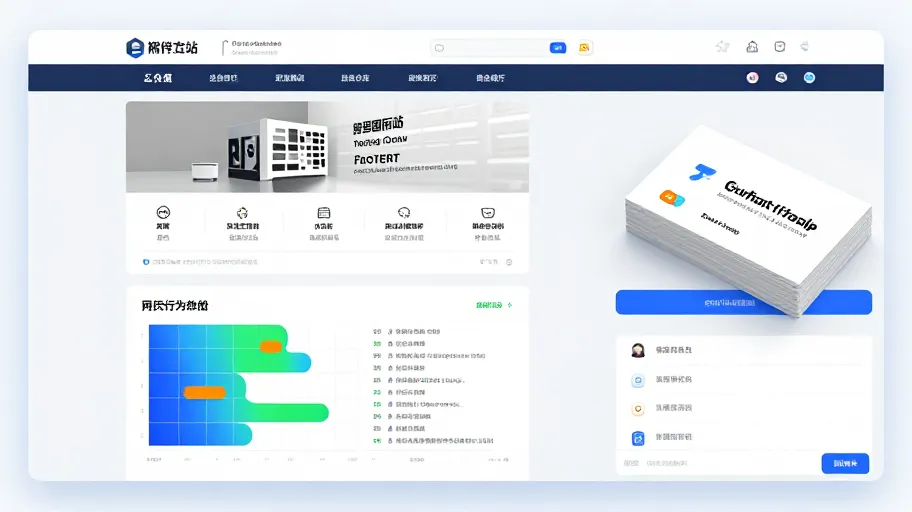
Direct Answer: For factories and foreign trade enterprises in Guangzhou and the Greater Bay Area, whether GEO promotion can deliver tangible results hinges not on “whether to do it,” but on integrating three layers of data: the content layer (what AI searches can see), the behavior layer (what visitors do on the independent site), and the lead layer (how the sales team follows up). If any one of these layers is disconnected, GEO investment will only enhance “visibility” rather than “inquiries.” This article provides a self-implementable decision-making framework and checklist to help readers determine if they should enter this field and which data needs to be integrated.

Guangzhou sellers building independent sites—92% stop updating within six months—the problem isn’t technology, but treating websites as showcases instead of fulfillment hubs. This article uses five proven real-world cases to explain how high-conversion architecture, Cantonese service embedding, Canton Fair ID unification, local cloud cost reduction, and repurchase behavior tracking interlock to automatically trigger the next purchase with every delivery.

92% of Guangzhou foreign trade enterprises haven't even started optimization yet, but they've already lost at the very first line of code for their multilingual websites. It's not that the translations aren't beautiful enough—it's that the architecture hasn't aligned with Google, users, and the conversion funnel—hreflang mismatch = traffic evaporation, static Spanish = Latin American users simply close the page. This article uses real data and verifiable deliverables to help you avoid all pseudo-multilingual traps.

Has your Guangzhou business website seen a dramatic drop in organic traffic after a revamp? 83% of the problems lie not in the code, but in semantic disconnection. Drawing from 17 real-world cases across Guangzhou and Shenzhen, this article breaks down five critical actions—URL inheritance, structured data migration, indexing rhythm intervention, and more—to transform your revamp from a “risky gamble” into a lever for guaranteed growth.

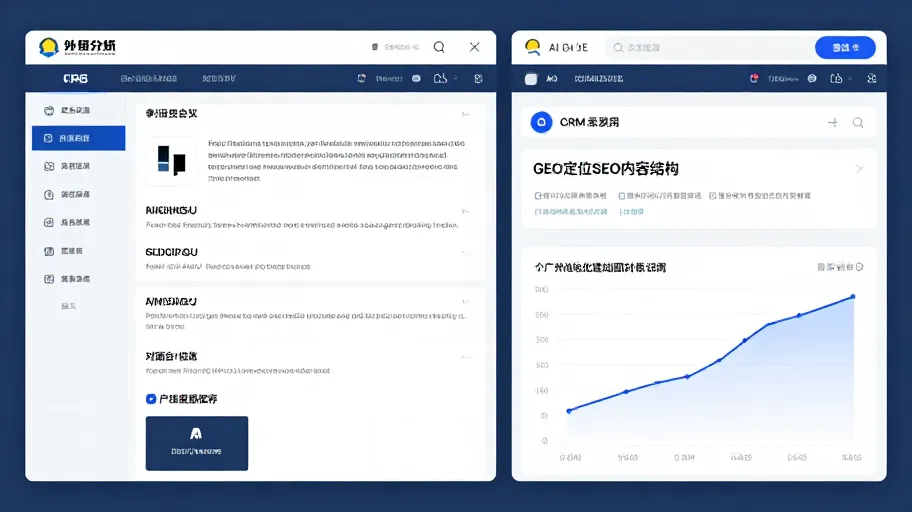
This isn’t another soft article about how ‘AI is amazing’—it’s the real-world AI CRM implementation path successfully adopted by 17 foreign trade enterprises across Guangzhou’s Tianhe, Panyu, and Baiyun districts.
We dissected three mainstream systems, compared the actual response logic of customs EDI, Alibaba RFQ, and WhatsApp message streams, and revealed exactly where that 37% conversion rate jump came from.

