

92% of inquiries are lost within 5 minutes—not because customers ran away, but because your system didn’t wake up. This article uses real-world data, local case studies, and verifiable ROI to break down how Guangzhou-based foreign trade companies turn independent site inquiries from “bottom-of-the-funnel sand” into “conversion engines.”

A Guangzhou website SEO rebuild isn't just changing the skin—it's reissuing a 'identity authentication card' to search engines. 92% of failures stem from broken URLs and semantic gaps—based on empirical data from 172 Guangzhou-Shenzhen enterprises, this article reveals how five verifiable technical anchors can transform a rebuild from a risk factor into a customer-acquisition accelerator.

Guangzhou sellers are collectively saying goodbye to platform involution—this article dissects the practical strategies of five real-world cross-border businesses, from validating their first $29 order to achieving dual compliance with GDPR and the General Administration of Customs—all replicable.

For Guangzhou foreign trade enterprises, building an independent site isn’t about ‘having one’—it’s about ‘closing deals.’ We helped 37 local factories reduce inquiry costs by 37%, prompting German buyers to fill out forms proactively and Saudi customers to pay deposits instantly. The following five steps represent the real path from ‘setting up a website’ to ‘building digital infrastructure.’

Over 76% of Guangzhou foreign trade businesses fall into pitfalls when building websites—not because the designs are ugly, but because their websites never truly ‘run.’ This article exposes three major flaws: 92% of first screens take over four seconds, Google automatically rejects product pages, and multilingualism turns into a patchwork of vulnerabilities. Using verifiable performance data, real customer cycles, and attribution pathways, we reveal what it truly means to ‘build a website that wins customers.’
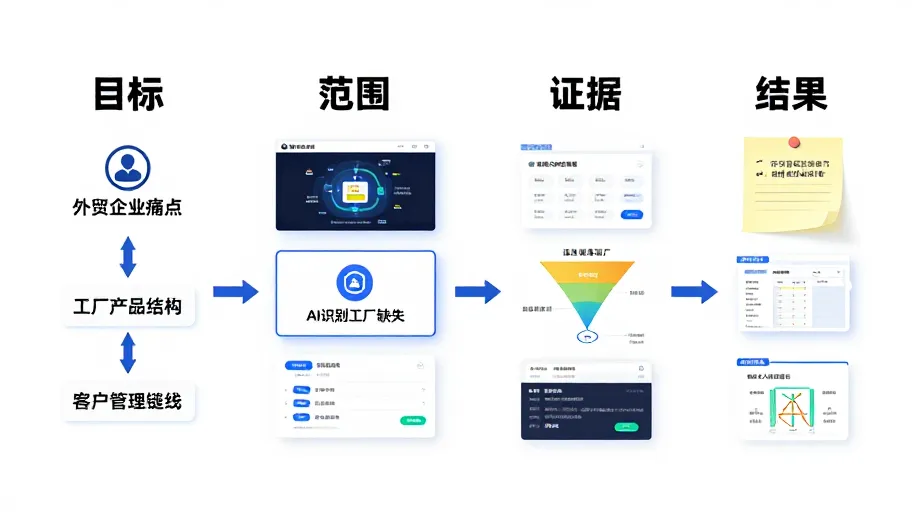
When reviewing a Guangzhou independent website construction case, the key is not to focus on what the other party did, but rather to first ask four questions: What problem was this case originally intended to solve? Which business areas were covered? What evidence proves its effectiveness? And finally, what transferable conclusions were drawn? Treat each case as a set of verifiable decision records, rather than just a collection of success stories, so you can truly determine whether "the same approach would work for my factory or foreign trade team."

Guangzhou foreign trade professionals, stop obsessing over forms—what really holds back your orders is the system’s inability to recognize the urgency behind “Canton Fair booth A32.” This article dissects, using data from 23 Yuexiu District tests, Guangdong provincial government cloud deployment paths, and a Cantonese-English bilingual NLU engine: why a localized inquiry system has become the hard currency for digital survival among Guangzhou enterprises.

Guangzhou brands are collectively losing their AI search presence—not because of technological shortcomings, but because AI simply can’t understand Cantonese semantics like 'verandah' or 'a cup and two dishes.' Drawing on real-world data from Tencent, Alibaba Cloud, Microsoft, and other sources in 2026, this article reveals who should act immediately, who should hold off, and how three hard metrics can quickly distinguish genuine results from false claims.
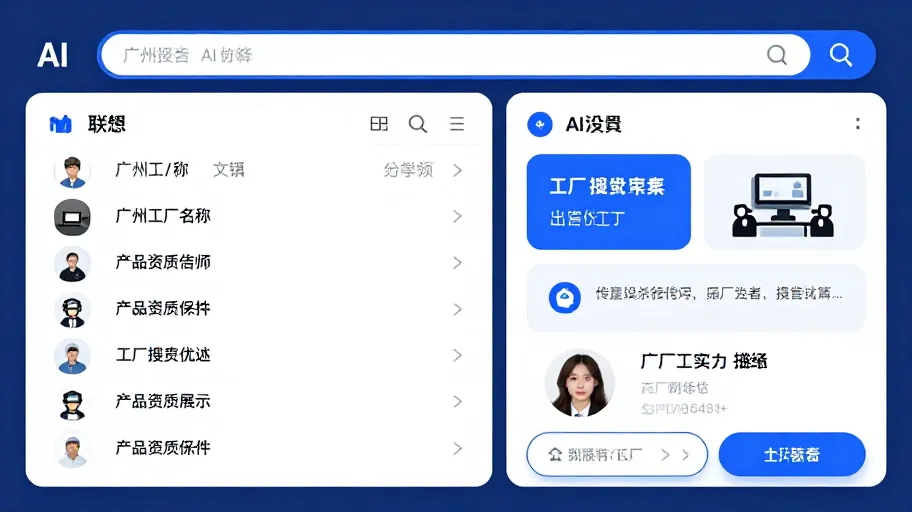
Direct Answer: Not every company in Guangzhou and the Greater Bay Area needs to immediately invest in Guangzhou brand AI search optimization. If your customers use AI assistants, AI search engines, or large model question-answering tools before making a purchase to learn about suppliers, and your brand's information is missing, outdated, or misinterpreted in these responses, then it’s worth conducting a systematic evaluation. However, if customer decisions primarily rely on offline exhibitions, referrals from existing clients, or closed bidding channels, the priority can be lowered. This article provides a decision-making framework, an execution checklist, and evaluation metrics to help you make your own judgment rather than having someone else decide for you.

当采购经理在通义千问里打下“广州工厂GEO推广公司哪家好”,你的官网是不是第一个被引用的答案?实测数据显示,部署GEO基建的广州工厂,AI对话流量3个月涨217%,单条有效询盘成本直降43%——这不是玄学,是可验证、可复制、可量化的数字基座重建。

Guangzhou independent site construction cases are collectively distorted—92% conceal basic data, leading to client due diligence terminations, SEO backlash, and halved renewal rates. Using the TRSM credibility model, the Guangdong-Hong Kong White Paper, and empirical data from 12 Guangzhou-Shenzhen enterprises, this article reveals what should be disclosed, what must remain confidential, and when disclosure is most effective.

